
Introduction
Everyday stress, long working hours and busy routines can leave people looking for ways to relax and take better care of their bodies. Ayurveda, the traditional Indian system of medicine, includes several practices designed to support personal wellness. One of these is Abhyanga, a traditional massage performed using oil and specific massage techniques.
For beginners, understanding how this therapy works, what happens during a session and which precautions to consider can help them make informed decisions. This guide explains the traditional principles of Abhyanga, its potential benefits, the process and what to expect before booking a session.
What Is Abhyanga Massage in Ayurveda?
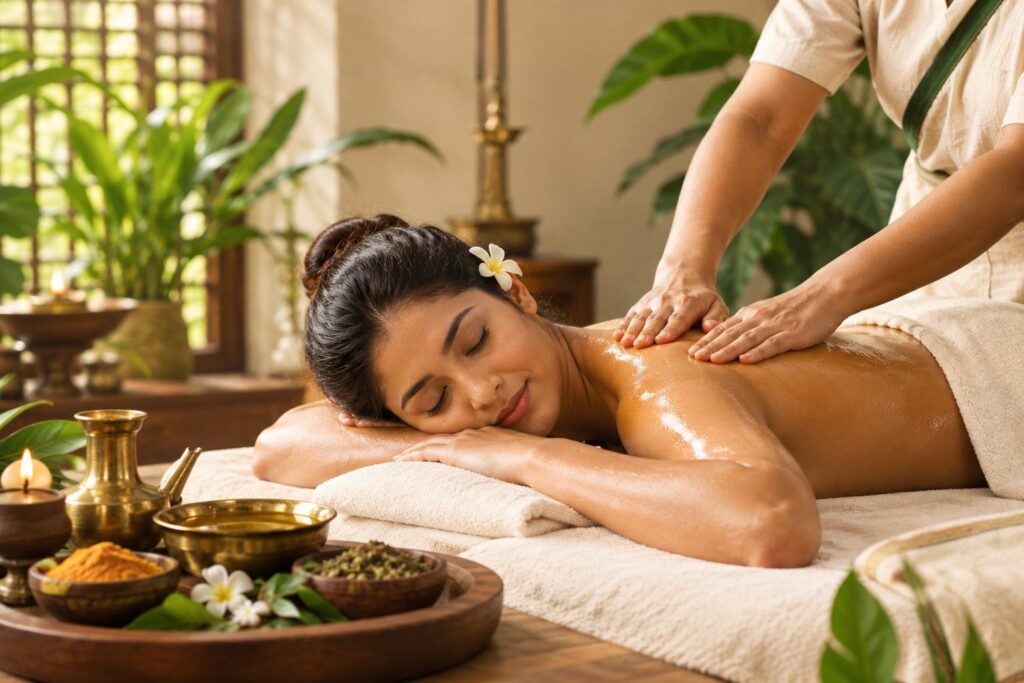
Abhyanga is a traditional Ayurvedic oil massage in which warm oil is applied to the body using systematic massage movements. The oils and techniques may vary according to the practitioner’s approach, the person’s needs and the traditions followed by the clinic.
In Ayurveda, Abhyanga is commonly associated with daily self-care practices and specialised wellness routines. It is traditionally used to support relaxation, nourish the skin and promote a sense of physical comfort.
Unlike an ordinary relaxation massage, an Ayurvedic Abhyanga session may incorporate traditional principles related to an individual’s constitution, commonly described through the doshas: Vata, Pitta and Kapha.
However, Ayurvedic explanations of these concepts should be distinguished from established biomedical evidence. Although massage may help some people feel relaxed and temporarily relieve muscle tension, claims that Abhyanga treats diseases or balances specific biological processes require appropriate scientific evidence.
What Are the Potential Benefits of Abhyanga Massage?
People explore this traditional therapy for different wellness reasons. Its effects may vary depending on individual circumstances, massage techniques and the oils used.
1. Supports Relaxation and Stress Relief
A calm environment and gentle massage movements may help people unwind after a demanding day. Massage can provide a relaxing experience and may temporarily reduce feelings of tension.
Abhyanga is often incorporated into personal wellness routines by people seeking dedicated time for relaxation.
2. Helps Moisturise the Skin
The oils used during an Ayurvedic massage can help moisturise the skin and reduce dryness. This may be particularly useful for people who experience rough or dry skin, provided the selected oil suits their skin type.
People with sensitive skin should discuss suitable products with the practitioner and consider a patch test before a full session.
3. May Ease Muscle Tension
Gentle massage can help some individuals experience temporary relief from everyday muscle tightness and physical discomfort. The pressure and techniques should be adjusted according to comfort and health needs.
Abhyanga should not replace medical evaluation for persistent pain, swelling, injuries or unexplained physical symptoms.
4. Encourages a Consistent Self-Care Routine
Setting aside time for a massage can encourage people to prioritise rest and personal well-being. When combined with appropriate sleep habits, balanced nutrition and regular physical activity, it may form part of a broader self-care routine.
5. Provides a Traditional Wellness Experience
For people interested in Ayurveda, Abhyanga offers an opportunity to experience a traditional practice under professional guidance. The session may include consultation, oil selection and massage movements tailored to individual preferences and suitability.
These potential benefits should not be interpreted as a guarantee of specific health outcomes.
How Is an Ayurvedic Abhyanga Massage Performed?
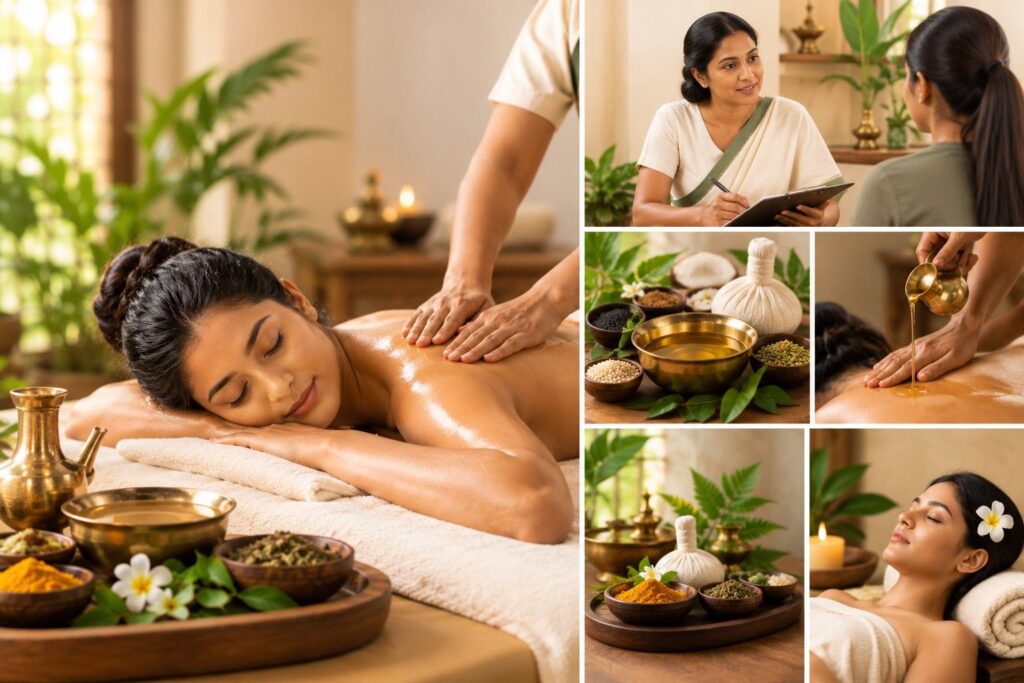
The exact process can differ between practitioners and wellness centres. A typical session may include the following steps.
Step 1: Initial Consultation
The practitioner asks about your health history, skin sensitivity, allergies, current symptoms and treatment preferences. Share details of any medical conditions, injuries or medications that could affect your suitability for massage.
Step 2: Oil Selection
An oil is selected according to the practitioner’s approach and your individual needs. Traditionally used oils may include sesame or coconut oil, although the choice varies.
Tell the practitioner about allergies, fragrance sensitivities or previous reactions to massage oils before the session begins.
Step 3: Application and Massage
The practitioner applies oil and uses systematic movements across suitable areas of the body. Pressure, positioning and the areas treated should be discussed beforehand and adjusted to your comfort.
Some sessions may involve a full-body massage, while others focus on selected areas.
Step 4: Post-Massage Care
After the session, the practitioner may provide simple recommendations about removing excess oil, bathing and general aftercare.
Ask about the recommended duration of the session, hygiene arrangements and any precautions relevant to your health.
Who Should Consider Abhyanga Massage?
Adults looking for a traditional relaxation experience or help with dry skin may wish to explore Abhyanga after an appropriate consultation.
However, massage is not suitable for every situation. People with active skin infections, open wounds, acute injuries, fever, certain circulatory conditions or significant unexplained pain should seek appropriate medical advice before proceeding.
Pregnant individuals and people with chronic health conditions should consult their healthcare professional and ensure the practitioner has the appropriate training for their circumstances.
Stop the session if you experience pain, dizziness, skin irritation or other concerning symptoms.
How to Choose an Ayurvedic Centre for Abhyanga Massage
Choosing a suitable provider is important for a comfortable and responsible wellness experience.
Before booking, check whether the centre:
– Provides a consultation before recommending treatment.
– Explains the massage process, oils and potential precautions.
– Maintains suitable hygiene and uses clean linens and equipment.
– Employs appropriately trained practitioners.
– Clearly communicates session duration, charges and aftercare.
If you are exploring Abhyanga massage in Ghaziabad or nearby areas, contact the centre beforehand to ask about its procedures, practitioner qualifications and available appointments.
Avoid choosing a service solely on claims of guaranteed detoxification, disease treatment or immediate results
Conclusion
Abhyanga is a traditional Ayurvedic oil massage that may support relaxation, skin moisturisation and temporary relief from everyday muscle tension. Understanding the process, selecting suitable oils and discussing health concerns beforehand can help you decide whether it fits your wellness preferences. If you are considering Abhyanga massage in Ghaziabad, begin by consulting a qualified practitioner and asking about the available treatments, safety measures and expected experience. A personalised and informed approach is preferable to relying on exaggerated health claims.